The Anatomy of a Highly Effective Workday
(Or: Why I Just Rearranged My Office Again)
If you’ve ever found yourself moving your desk “just a few inches to the left” or swapping out chairs for the third time this year, there’s a reason why even the smallest changes make a difference. High performers can often be found tinkering with their workspace, because the most effective workdays don’t happen by accident. They’re intentionally built through smart systems, thoughtful space and supportive structure.
And increasingly, business owners, entrepreneurs and remote professionals are discovering that flexible work spaces plays a powerful role in making that equation work. Let’s break it down.
Designing Your Workday (& Workspace) on Purpose
1. Systems: The Invisible Architecture of Your Day
Your systems are the routines, habits, workflows and tools that guide how you move through your workday. They’re not always visible, but they shape everything.
Highly effective professionals tend to have systems like:
- Dedicated deep-work blocks without interruption
- Clear boundaries between meetings, admin and creative work
- Organized digital tools (calendars, project management platforms, task lists)
- Rituals that signal “start” and “end” to the workday
But even the best systems can collapse when the environment doesn’t support them. You can time-block all you want, but if you’re working from a kitchen counter, dodging distractions or fighting with unreliable Wi-Fi, your systems never fully get traction.
This is where flexible workspaces become more than a convenience. They become infrastructure for consistency. When you walk into a professional workspace designed for productivity, your systems finally have room to function the way they’re meant to.
2. Space: Your Environment Is Either Supporting You or Draining You
Space is not neutral. It influences energy, focus, confidence and even decision-making. Think about the difference between:
- Taking a client call from your couch vs. a professional meeting room
- Writing proposals at a noisy coffee shop vs. in a quiet, dedicated office
- Trying to focus at home vs. stepping into a flexible workspace built for work
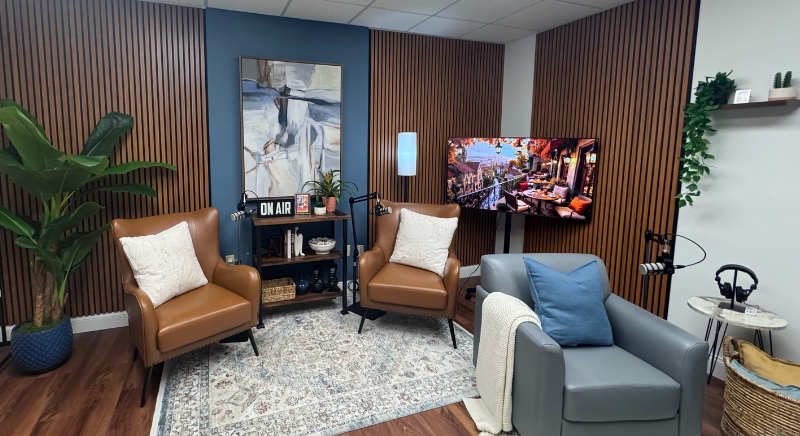
The environment shapes your behavior more than you might like to admit. That’s why so many professionals seek out flexible workspaces: not because they need more square footage, but because they need better square footage.
A thoughtfully designed workspace provides:
- Fewer distractions and stronger concentration
- A psychological shift into “work mode”
- A professional setting that enhances credibility
- The flexibility to choose what workspace you need that day (private office, meeting room, day office, coworking space)
At Crown Center Executive Suites, members aren’t locked into one rigid setup. The space adapts to the way people actually work, whether that’s solo deep focus, collaborative sessions, client meetings or hybrid schedules.
This adaptability matters because no two workdays look exactly the same.
3. Structure: Freedom Works Best When It Has a Framework
There’s a common misconception that flexibility means lack of structure. In reality, the opposite is true. The most productive professionals use flexibility within a supportive framework.
Structure shows up as:
- Having a consistent yet flexible workspace
- Maintaining regular hours that support focus and boundaries
- Access to professional amenities without operational hassle
- Predictable routines supported by the workspace environment
This is where utilizing flexible workspaces becomes the MVP. It offers the structure of a professional office, without the rigidity of long-term leases or one-size-fits-all setups. It allows your business to be agile, scale up or down on demand, and move seamlessly from one geographic region to another.
Advantages Include:
- A reliable, professional environment
- The ability to scale up or down as your business evolves
- Access to meeting rooms when needed
- Day offices for focused work
- Virtual office options for business presence without overhead
This structure supports growth rather than constraining it.
Why Workspace Design Is a Productivity Strategy (Not Just an Aesthetic Choice)
Rearranging your office isn’t just about aesthetics; it’s often an instinctive attempt to optimize how you function, focus and work. Small changes in space can lead to:
- Better focus
- Reduced mental fatigue
- Increased motivation
- Improved client interactions
- More efficient workflows
Businesses that understand this don’t treat workspaces as an afterthought. They treat it as part of their operational strategy. That’s why companies of all sizes, from solopreneurs to growing teams, are increasingly choosing flexible office space over traditional office models. It supports the reality of modern work: dynamic schedules, hybrid teams, fluctuating workloads and evolving priorities.
How to Design Your Workday on Purpose
First Ask:
- Does my workspace support focus?
- Do I have the flexibility to adapt my environment based on my workload?
- Does my setting reflect the professionalism I want my business to convey?
- Does my space energize me—or exhaust me?
The answers often point back to your workspace. Because effective workdays aren’t just about what you do. They’re about where you do it. We optimize our calendars. We refine our workflows. We invest in tools and technology. Yet many professionals overlook one of the most powerful productivity levers: the workspace environment itself.
The right flexible office space doesn’t just house your business. It supports your systems, reinforces your structure, and elevates the quality of your workday. Crown Center Executive Suites, centrally located in North Fort Lauderdale, offers a wide range of flexible workspaces.
Check out Crown Center Executive Suites’ many office space options that support the goals of small and midsize businesses.
- Professional Office Spaces
- Spacious Executive Suites
- Meeting Rooms for Large and Small Groups
- Flex Options like Day Offices on Demand and Virtual offices
- Shared Offices & Dedicated Desks
Schedule your tour of Crown Center Executive Suites today.
Additional reads that might interest you: